COMMERCIAL RAMEN MACHINE ELECTRICAL GUIDE
220V vs 380V Commercial Ramen Machine: What Restaurant Buyers Should Confirm
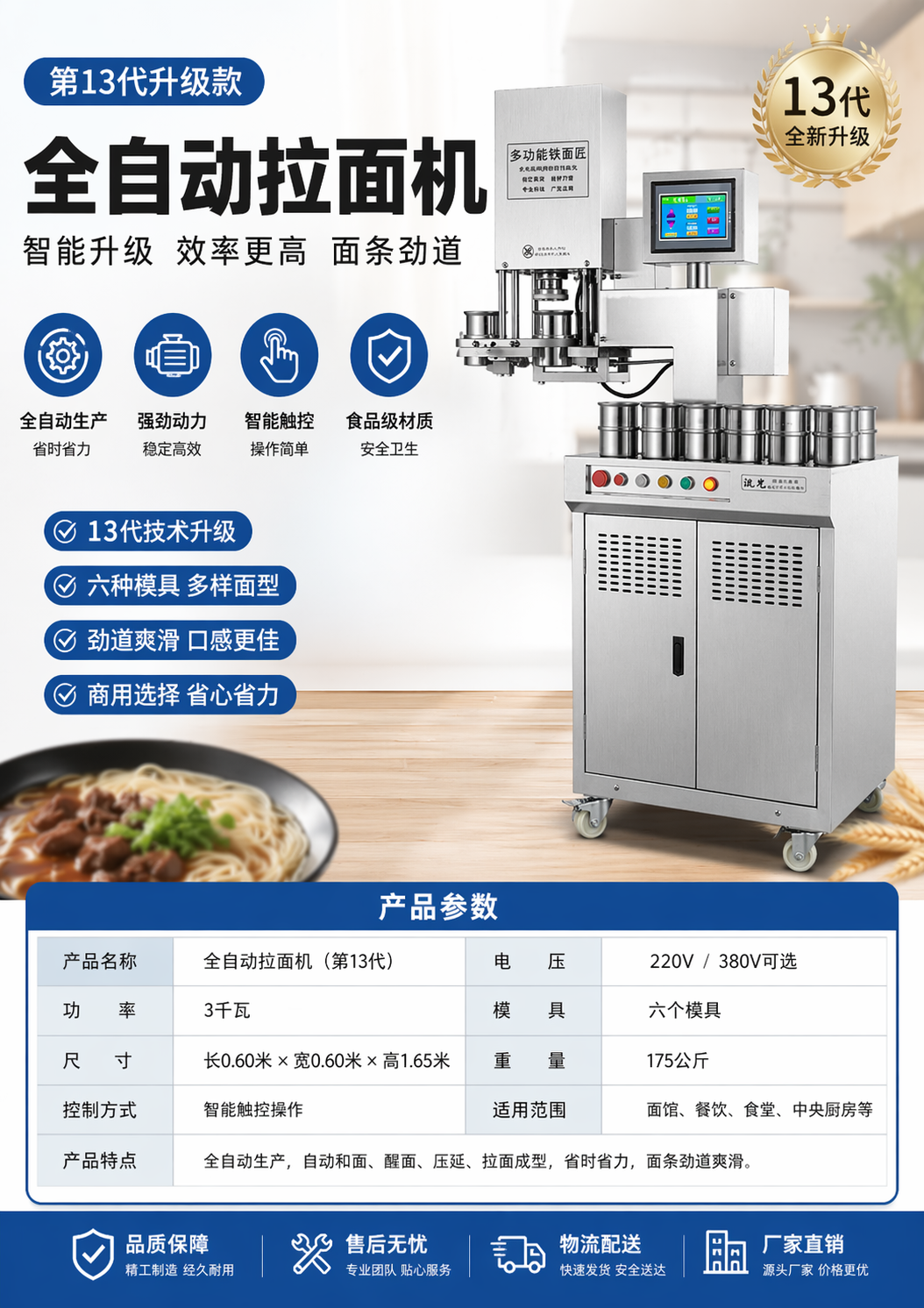
When restaurant buyers compare a 220V and 380V commercial ramen machine, the decision should be based on the real installation site, kitchen power supply, machine configuration and formal quotation. The YIHUI LMJ90 13th-generation automatic ramen machine page lists 220V / 380V optional voltage, 3.0kW power, L 0.60m × W 0.60m × H 1.65m dimensions, 175kg machine weight, smart touch control and six dies. This guide explains how to discuss voltage selection without guessing price, output, certification or delivery details.
· YIHUI Food Machinery
1. Start with the site power supply
A commercial ramen machine voltage decision should begin with the restaurant or kitchen site, not with a general product name. Some buyers have access to 220V power, while other sites can provide 380V industrial power. The correct choice depends on what the installation area can safely support and what the quoted machine configuration requires.
Before confirming an order, buyers should ask their electrician or site manager to confirm available voltage, socket position, cable route, grounding condition and whether any electrical work is needed before installation. YIHUI can then discuss the machine configuration according to the confirmed site conditions.
2. Use the LMJ90 verified specification as the reference
The current YIHUI Commercial Automatic Ramen Machine page lists the LMJ90 13th-generation model with 220V / 380V optional voltage and 3.0kW power. It also lists L 0.60m × W 0.60m × H 1.65m dimensions, 175kg machine weight, smart touch control, six dies and applications for noodle shops, restaurants, canteens and central kitchens.
These are useful real details for the enquiry. They do not replace a formal quotation, but they help buyers prepare the right questions. If a buyer is comparing several ramen noodle machine manufacturers, the LMJ90 voltage, power, dimensions and die count should be listed clearly in the enquiry so every supplier responds to the same requirement.
3. Do not compare voltage without the kitchen workflow
Voltage selection is only one part of the buying decision. A ramen restaurant also needs to plan where dough is prepared, where the automatic ramen noodle machine stands, where noodles are collected and how staff move during service. Electrical access should support this workflow instead of forcing the machine into a poor position.
For example, if the machine is placed near the cooking station, the buyer should still leave enough loading, collection and cleaning space. If the machine is part of a larger noodle preparation line, the buyer should also explain whether a dough mixer, dough sheeter, wall-mounted noodle maker or other noodle equipment is used in the same area.
4. Ask what changes between 220V and 380V quotations
When a commercial ramen machine is listed with optional 220V / 380V voltage, buyers should confirm whether the final price, plug, cable, electrical component configuration, lead time, packing list or installation instructions differ between the two versions. These details should be written in the quotation or order confirmation.
Useful questions include:
- Is the quoted LMJ90 machine configured for 220V or 380V?
- Does the 3.0kW power rating remain the same for this quotation?
- What plug, cable and installation guidance are supplied?
- Are any electrical parts different between voltage versions?
- Does voltage choice affect delivery time, packing list or after-sales support?
- What should the buyer prepare before the machine arrives?
5. Keep the enquiry factual and buyer-ready
A good enquiry for a commercial automatic ramen machine should include the target market, restaurant type, site voltage, available space, noodle formats, required dies and expected workflow. Buyers should also request real product photos, operation video, instruction information and final packing details.
Avoid relying on vague claims such as higher voltage always being better. Also avoid assuming output, certification, warranty scope, delivery date or export documents unless they are confirmed for the exact order. The safer approach is to use the confirmed LMJ90 specification as the starting point and request a written configuration.
6. Internal link for the main product page
For complete product details, buyers should review the [YIHUI Commercial Automatic Ramen Machine](/en/products/noodle-maker/) page. That product page is the core money page for LMJ90, commercial ramen machine, automatic ramen noodle machine, ramen machine for restaurant and ramen noodle machine manufacturer searches.
Supporting guides like this voltage article should help buyers understand one decision point, then return them to the product page to confirm real machine details.
7. Suggested English video title and description
Title: 220V vs 380V Commercial Ramen Machine: What Buyers Should Confirm
Description: Before ordering a commercial automatic ramen machine, confirm the site power supply, LMJ90 voltage option, 3.0kW power, six dies, installation space, quotation configuration and packing list with YIHUI.