COMMERCIAL RAMEN MACHINE WORKFLOW COMPARISON
Automatic Ramen Machine vs Manual Noodle-Making Workflow: What Buyers Should Confirm
Buyers searching for a commercial automatic ramen machine often compare it with a manual noodle-making workflow. The real decision is not simply machine versus hand work. A restaurant, canteen or central kitchen should compare dough preparation, noodle formats, operator movement, cleaning access and the exact machine configuration. This guide uses the verified LMJ90 13th-generation ramen machine details already shown on the YIHUI product page, without inventing unconfirmed capacity, price, certification or delivery claims.
· YIHUI Food Machinery
1. Compare the complete workflow, not only the machine name
Manual noodle-making depends heavily on the operator's skill, timing and repeated hand work. A commercial automatic ramen machine is used to make part of the noodle-forming workflow more repeatable, but it still needs prepared dough, suitable noodle dies, clear operator access and cleaning space.
For buyers, the useful comparison is the complete workflow:
This is why the [Commercial Automatic Ramen Machine](/en/products/noodle-maker/) product page should be treated as the core quotation page, while comparison articles like this one help buyers understand the decision before requesting details.
- where the dough is mixed and rested;
- how the dough is loaded into the machine;
- which noodle formats are needed for the menu;
- where formed noodles are collected;
- how the cooking station, staff route and cleaning area connect.
2. Use the LMJ90 specification as a real comparison point
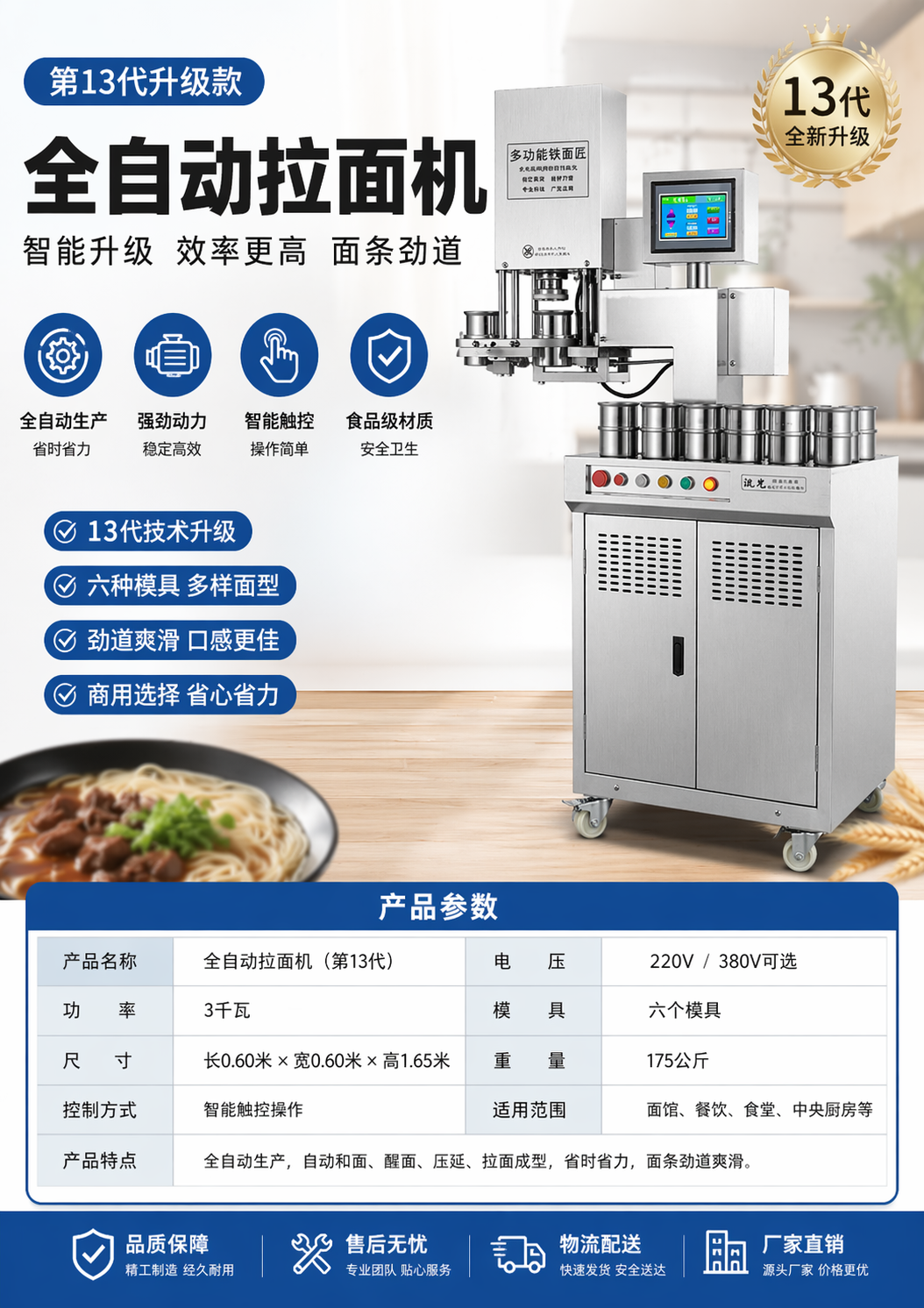
The YIHUI LMJ90 13th-generation automatic ramen machine has verified product information shown on the current product page:
These details give buyers something concrete to compare with a manual noodle-making workflow. For example, space planning should consider the 0.60m × 0.60m footprint and 1.65m height. Electrical planning should confirm whether 220V or 380V is required for the selected installation. Menu planning should confirm whether the six included dies match the noodle formats sold in the restaurant.
- Model: LMJ90
- Product name: Automatic Ramen Machine (13th generation)
- Machine dimensions: L 0.60m × W 0.60m × H 1.65m
- Voltage: 220V / 380V optional
- Power: 3.0kW
- Machine weight: 175kg
- Control method: Smart touch control
- Included dies: 6 dies
- Applications: noodle shops, restaurants, canteens and central kitchens
- Warranty: one-year warranty service
- Configuration and packing list: subject to the actual delivered goods
3. Manual workflow may be flexible, but it is harder to standardize
A small restaurant may begin with a manual workflow because it feels flexible and familiar. However, manual noodle preparation can vary by operator experience, dough condition, service pressure and staff availability. During busy meal periods, this can make noodle thickness, timing and output rhythm harder to keep consistent.
An automatic ramen noodle machine does not remove every preparation step. It is still important to prepare suitable dough and train the operator. The benefit is that the forming step can be discussed around a defined machine, confirmed dies and a planned operating route. This is especially useful for restaurants that want a more repeatable workflow instead of relying only on one skilled worker.
4. Check dies and noodle formats before discussing price
Many buyers ask about commercial ramen machine price first. Price matters, but the die configuration should be checked before comparing quotations. The LMJ90 page lists six dies. Buyers should still confirm the exact die specifications, noodle shapes and changeover routine for the menu they plan to serve.
Useful questions include:
This keeps the enquiry practical and avoids comparing one supplier's basic quotation with another supplier's different configuration.
- Which six dies are included in the quoted LMJ90 configuration?
- Are additional dies available for other noodle formats?
- How are dies removed, cleaned and installed again?
- Which dough condition is recommended for stable forming?
- Can YIHUI provide real operation images or video for the selected configuration?
5. Plan the restaurant route from dough to bowl
A ramen shop or Lanzhou beef noodle restaurant should plan how the machine fits into daily service. The machine should not be treated as an isolated object. It needs a clear relationship with the dough mixer, preparation table, cooking station, serving counter and cleaning area.
If the shop already uses a dough mixer or dough sheeter, explain that workflow when contacting YIHUI. If the shop is still planning the kitchen layout, share the available space, expected menu and operator position. A good supplier conversation should make the route from dough preparation to noodle forming and cooking easier to understand.
6. Quotation checklist for automatic ramen machine buyers
Before asking for a final quotation, prepare one checklist and send the same information to each ramen noodle machine manufacturer. This makes comparison easier and prevents missing details.
Include:
Do not assume capacity, certification, delivery time, price or export documents unless they are confirmed for the exact order.
- target noodle styles and menu;
- dough condition and preparation method;
- required voltage: 220V or 380V;
- available installation space;
- preferred machine model, such as LMJ90;
- included dies and optional dies;
- warranty and spare-part communication;
- packing list and delivered configuration;
- real photos, operation video and instruction materials.
7. Suggested English video title and description
Title: Automatic Ramen Machine vs Manual Noodle Workflow: LMJ90 Buyer Comparison
Description: Compare a manual noodle-making workflow with the YIHUI LMJ90 13th-generation commercial automatic ramen machine. Review six dies, 220V/380V voltage, 3.0kW power, machine dimensions, restaurant workflow and quotation details before purchase.