BUYER GUIDE
Commercial Ramen Machine Price Factors: What Buyers Should Confirm Before Asking for a Quote
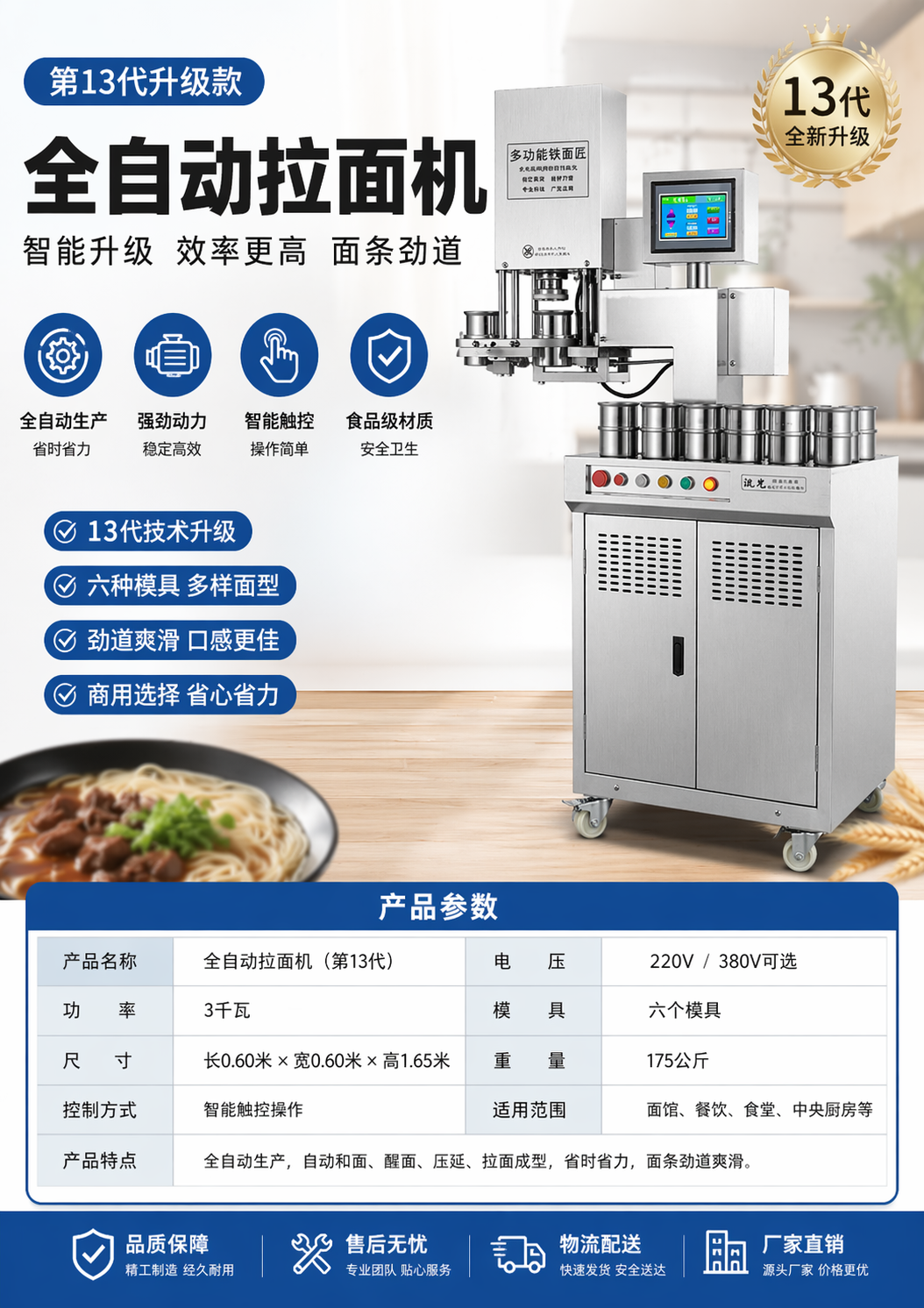
Commercial ramen machine pricing should be discussed around a verified configuration, not a generic product name. The LMJ90 13th-generation automatic ramen machine now has confirmed public information including dimensions, voltage options, power, machine weight, smart touch control, six dies and restaurant applications.
· YIHUI Food Machinery
1. Start with a verified ramen machine configuration
A commercial ramen machine quote becomes much clearer when the buyer can compare a real machine instead of a broad category name. YIHUI now lists the LMJ90 13th-generation automatic ramen machine as the core ramen-machine product page.
The currently provided LMJ90 information includes machine dimensions L 0.60m × W 0.60m × H 1.65m, 220V / 380V optional voltage, 3.0kW power, 175kg machine weight, smart touch control, six dies, one-year warranty service and applications for noodle shops, restaurants, canteens and central kitchens. Final configuration and packing list should still be checked against the actual delivered goods.
2. Why price cannot be judged from the product name alone
Searches for commercial ramen machine price often begin with a quick budget question. In practice, the quote depends on the confirmed configuration, the die set, the voltage requirement, the workflow and the supporting equipment around the ramen machine.
Two machines may both be called automatic ramen machines, but the value of the quotation changes when one quote clearly confirms dimensions, voltage, power, weight, dies, control method, warranty and packing scope while another quote only gives a vague headline.
3. Five quotation factors to confirm before purchase
Before asking a commercial ramen machine manufacturer for a price, prepare the details that affect configuration and use. This makes the enquiry more useful than asking only for the lowest price.
- Machine model and verified specifications, such as LMJ90 dimensions, power and weight
- Voltage requirement, including whether 220V or 380V is needed for the installation site
- Required noodle formats, die quantity and die changeover expectations
- Restaurant, canteen or central-kitchen workflow from dough loading to cooking
- Warranty, packing list, delivery details, spare parts and support process to confirm
4. Use the product page as the quotation reference
For YIHUI enquiries, the Commercial Automatic Ramen Machine product page should be used as the main reference page because it contains the product gallery, operation videos, LMJ90 specification table, FAQ and related noodle-machine links.
Supporting equipment such as a commercial dough mixer, dough sheeter, knife-cut noodle machine, wall-mounted noodle maker or cold noodle machine should be discussed only when the buyer’s full noodle workflow requires those steps.
5. Suggested enquiry wording
A clear enquiry can be short: tell YIHUI that you are reviewing the LMJ90 commercial automatic ramen machine, then provide the noodle formats, dough preparation method, shop workflow, required voltage, installation space, expected service routine and whether you need matching dough preparation equipment.
This gives both sides a practical basis for discussing the machine configuration, quotation scope and after-sales support without inventing unverified price, capacity or certification claims.