MEAT PROCESSING BUYER GUIDE
How to Choose Commercial Meat Processing Equipment
Commercial meat processing equipment should be selected around the material, the required finished result and the way work moves through the processing area. A clear enquiry helps a supplier review the application without relying on guessed output figures or an unsuitable machine category.
· YIHUI Food Machinery
1. Start with the material, not the machine name
Fresh boneless meat, frozen beef or mutton rolls, pork material for skinning and bone-in portions are different processing tasks. They need different feeding methods, cutting areas and operating routines. Before comparing equipment, describe the raw material, its condition before processing and the result required after processing.
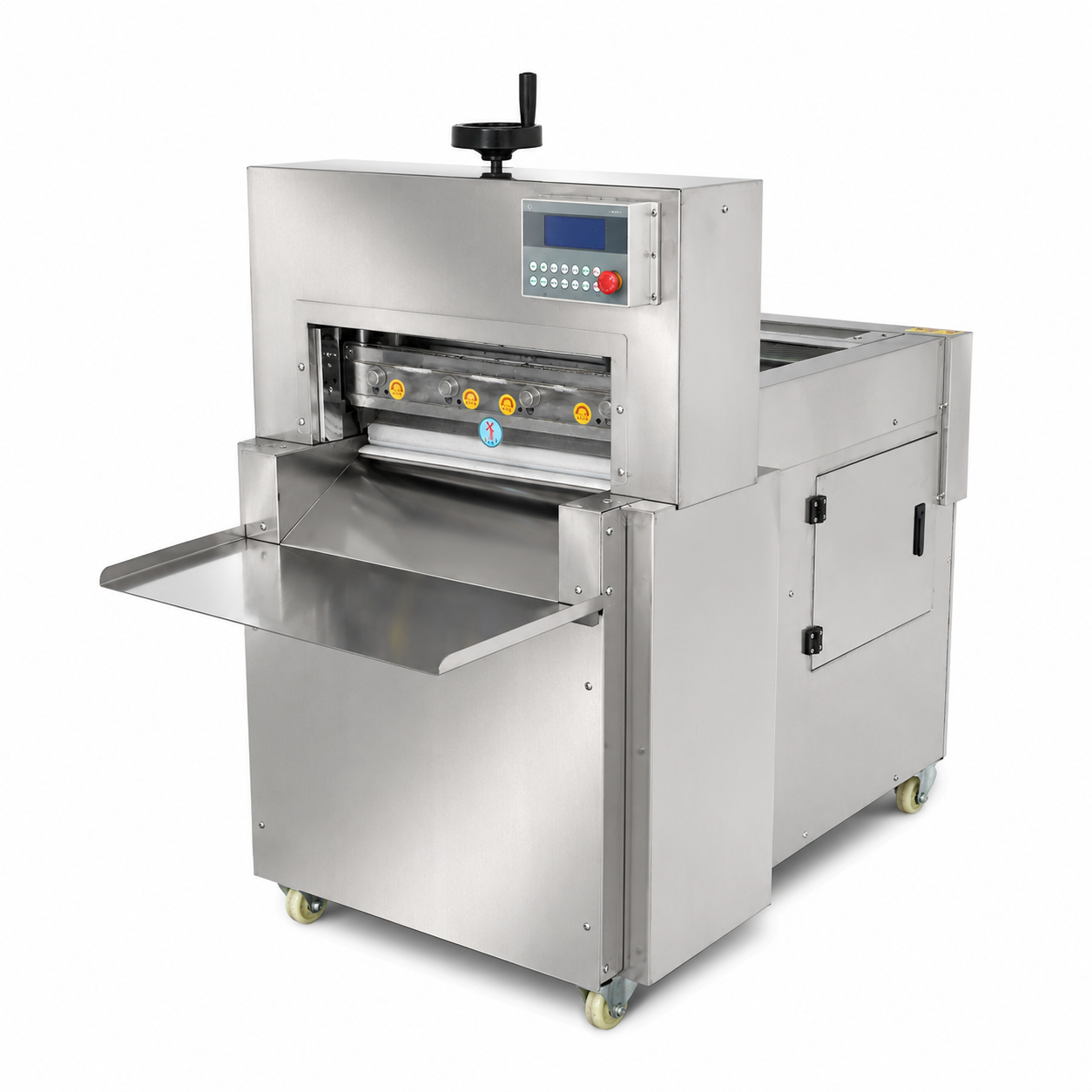
For example, a conveyor-fed fresh meat slicer is intended for repeatable slices of prepared fresh meat. A digital beef and mutton roll slicer is designed around frozen rolls and includes settings for slice thickness and quantity. A skinning machine removes skin from prepared material, while a bone cutting machine is intended for ribs, poultry and other bone-in meat. Defining the material first prevents a quotation from being based on the wrong equipment family.
2. Choose the equipment category by the required result
Use the finished product as the next selection filter. If the workflow needs repeatable fresh-meat slices for hot-pot or barbecue preparation, discuss the meat format and required slice thickness. If the material is a frozen beef or mutton roll, provide the roll format and the slice and quantity settings needed for the intended operation.
For skinning, explain the material preparation and how it will be presented to the skinning area. For bone-in cutting, identify the material and target portion length. These details are more useful than asking only for a generic “meat cutting machine,” because they give the supplier a defined processing result to review.
3. Map the machine into the actual work area
Equipment selection also depends on the site. Record the available floor or countertop space, power supply and the direction that material should move from preparation to processing and collection. Leave practical access for loading, receiving the finished material, routine inspection and cleaning.
A compact countertop fresh meat slicer requires clear infeed and receiving space even though its footprint is smaller than a floor-standing machine. A multi-position frozen meat roll slicer needs room for loading rolls and collecting slices. A mobile bone cutting machine can support a flexible processing-floor layout, but its position must still allow safe access and an orderly material flow.
4. Review operation, cleaning and safety before ordering
Ask how the selected configuration is loaded, adjusted, stopped and cleaned. Identify the food-contact areas that need routine cleaning and make sure the planned location provides access to them. Operating and cleaning steps must follow the instructions supplied with the final machine configuration.
The enquiry should also state the available electrical supply and any site-specific installation requirements. Guards and work areas should be checked before operation, and power should be disconnected before cleaning the cutting, blade or roller areas. Final procedures should always follow the machine manual rather than a general online description.
5. Send a complete request for quotation
A useful quotation request includes the raw material, its condition before feeding, the target finished result, the planned workflow, available space and power supply. Photos or a short video of the material can provide additional context when written descriptions are not enough.
Do not assume a capacity, voltage, blade arrangement or finished size that has not been confirmed for the selected configuration. Ask the supplier to review the application and return the exact specifications that apply to the proposed machine. This makes technical comparison between quotations more reliable.
- Raw material and condition before processing
- Required slice, skinning or portion result
- Planned daily workflow and feeding method
- Available floor or countertop space
- Available electrical supply
- Cleaning and installation requirements
6. Compare suppliers using confirmed information
Compare proposals using the same application brief. Check whether each supplier has addressed the material, required result, site conditions and cleaning access. Request product photographs, operation videos and the exact configuration details that are available for the machine being offered.
A good equipment decision is based on fit for the intended process, not on the longest feature list. YIHUI can review the material, required result and site conditions before discussing a suitable commercial meat processing equipment configuration.